Bedding • Silk care
Choosing a Gingerlily Fitted Bed Layer: Pocket Depth, Weight, and Care
A fitted sheet can look effortless when it sits neatly over a mattress. Getting that smooth, secure finish, however, depends on a few practical details: mattress depth, the sheet’s pocket, fabric weight, and how the silk is washed and dried. Here’s what to check before choosing a Gingerlily silk fitted sheet—and how to help it keep its suppleness over time.
Published October 19, 2026
Start with the mattress, not the label
It’s easy to be drawn first to a color or the promise of a smooth silk surface. But with fitted sheets, the most important question is wonderfully unglamorous: Will it fit the mattress? A sheet that is too shallow can pull free at the corners, while one with excess fabric may feel loose and bunch beneath you. Neither makes for the composed, comfortable bed most people want at the end of a long day.
The key measurement is mattress depth, sometimes described as height. Measure from the bottom edge to the top surface, including any topper that will stay on the bed. If you use a mattress protector, include it as well. A thick topper can add several inches, changing the fit enough that a sheet which once worked perfectly begins to tug or slip.
Take the measurement at more than one point if the mattress has a pillow top or an uneven surface, and use the greatest depth as your guide. Then check the sheet’s pocket depth in its product details. A pocket describes the depth of the fitted corner construction, not simply the fabric’s overall dimensions. The sheet also needs enough material to wrap beneath the mattress and hold in place.
Allowing a little room beyond the mattress measurement is often helpful, especially when a protector or topper is involved. Still, don’t assume that a much deeper pocket is automatically better. The goal is a secure fit with enough fabric to tuck under the mattress, not a loose skirt of material that can shift during the night.
What pocket depth tells you—and what it doesn’t
Pocket depth is a useful comparison point, but it is not the whole story. Fitted sheets also rely on elastic, corner shaping, and the way fabric is cut. An elasticized edge helps hold the sheet around the mattress, while well-constructed corners make it easier to position the fabric without stretching one side excessively.
When shopping or comparing specifications, look for the stated pocket measurement and note whether it includes room for a mattress topper. If that detail isn’t clear, measure your complete sleep surface and contact the maker for clarification. It is better to resolve an uncertain measurement before laundering or using a delicate sheet than to discover that the corners will not stay put after the bed is made.
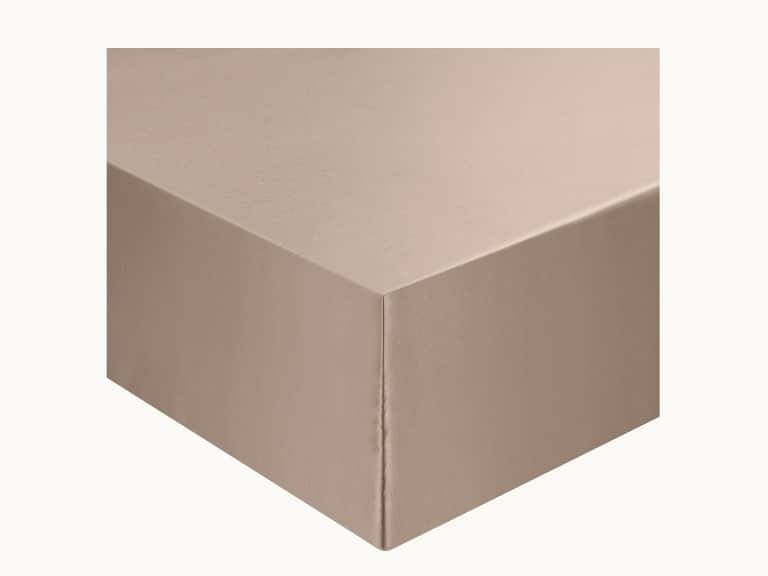
Some Gingerlily fitted-sheet listings specify a 15-inch pocket depth; other product descriptions may provide different construction details or omit a measurement. Check the individual listing rather than assuming every size or color has identical specifications. For example, the Mocha Silk Fitted Sheet is described as having an elasticized edge for a secure fit, with its silk weight and care instructions also listed. Confirm the dimensions for the size you are considering and compare them with your measured mattress.
Once the sheet is on the bed, check all four corners. The fabric should lie smoothly across the surface without being stretched drum-tight. At the corners, the elastic should sit beneath the mattress edge rather than ride up. If a corner pops free, reassess the combined mattress-and-topper depth, the sheet’s pocket measurement, and whether the sheet has been positioned evenly.
Momme weight, in plain language
Silk bedding often uses momme (pronounced “mummy”) to describe fabric weight. It is a traditional measurement used for silk, based on the weight of a piece of fabric of a specified area. In practical terms, momme can help you compare silk fabrics within similar product types: a higher figure generally indicates more silk by weight in the fabric, though it does not tell you everything about how a sheet will feel or perform.
Gingerlily fitted-sheet listings in the provided range include examples at 19 and 22 momme. That difference may contribute to a more substantial hand in the heavier option, but momme alone cannot predict softness, drape, durability, or sleeping temperature. Those qualities are also affected by the silk itself, how it is woven and finished, and how the fabric is cared for.
Think about the feel you prefer. A lighter silk fabric may have a more fluid, airy quality. A heavier one can feel more substantial in the hand. Neither is automatically the better choice: comfort is personal, and the right option depends on your preferences, climate, layering habits, and care routine. If you already own silk pillowcases or other bedding, comparing their stated momme weight with a sheet listing can offer a useful reference, provided you remember that different items may have different construction.
Weight should also be considered alongside the rest of the bed. A fitted sheet is only one layer, and the warmth you feel overnight depends on the room, sleepwear, duvet, mattress, and individual comfort. Silk is often valued for its smooth feel and ability to support a comfortable sleep environment, but no fabric can guarantee a particular temperature or solve every sleep concern. Treat weight as a comparison detail, not a promise.
A closer look at mulberry silk
Mulberry silk comes from silkworms raised on a diet of mulberry leaves. The term describes the source of the silk, not a special sheet weave or a single universal quality grade. In bedding, its appeal is tactile as much as technical: silk has a naturally smooth surface and a soft sheen, and it drapes differently from many cotton fabrics.
That smoothness is one reason silk sheets attract interest from people who enjoy a low-friction feel against the skin. It can also be appealing to anyone who likes a light, fluid layer rather than the crisp, dry hand associated with some percale cotton. Yet silk has its own personality. It needs gentler handling than many everyday cotton sheets, and a beautiful finish depends in part on following the care instructions supplied for the specific item.
Silk is a protein-based natural fiber, but descriptions such as “hypoallergenic” should not be treated as a medical guarantee. Individual sensitivities vary, and a fabric’s behavior can depend on finishes, detergents, and the surrounding sleep environment. If you have a known allergy or skin condition, consider advice from a qualified clinician and check the full material information rather than relying on a broad label.
For a bed that already includes a topper, remember that the topper can change both the surface feel and the required fitted-sheet depth. A topper may add cushioning, alter how the mattress edge is shaped, and increase the total height the fitted corners must cover. If you are choosing several layers, measure them together as they will be used—not one at a time on separate days.
Care is part of the choice
A sheet’s care label deserves a moment of attention before it reaches the bed. Gentle washing and careful drying are not fussy extras; they are part of maintaining a delicate textile. Many Gingerlily silk sheet descriptions advise a delicate machine cycle at no more than 30°C, mild liquid detergent, air drying, and a cool iron if needed. Always follow the instructions on the particular product, since recommendations can vary by item and construction.
Before washing, separate the sheet from rough fabrics, garments with zippers, and items with hooks or fasteners that could snag the silk. Turn pieces inside out where the care label recommends it, and avoid overloading the machine. The fabric needs space to move gently. A crowded drum can create unnecessary friction and tangling, even on a delicate program.
Choose a mild liquid detergent suitable for silk and use it sparingly. Avoid bleach, harsh stain treatments, and fabric softener unless the care label explicitly permits them. Silk already has a naturally smooth hand; extra products can leave residue or affect the fabric’s finish. If a spill or mark occurs, act promptly but gently. Blot rather than rub, and test any treatment according to the manufacturer’s guidance before applying it more widely.
Air drying is generally the careful route described for these sheets. Support the fabric rather than pulling it into shape while wet, and keep it away from direct heat. A radiator, tumble dryer, or hot surface can expose silk to more heat than the care instructions allow. Once dry, a cool iron may help restore a smooth appearance if the label permits it. Use the iron setting stated by the manufacturer, and avoid pressing hard or leaving the iron in one place.
Put the sheet away only when it is fully dry. Store it clean and dry, with room to breathe, and keep it separate from rough objects that might catch the weave. A calm routine—gentle wash, careful air drying, cool ironing only when necessary—can make silk bedding easier to maintain than its luxurious reputation might suggest.
How to build a sensible comparison
It helps to compare fitted sheets using the same small checklist each time. Begin with the exact product and size, then note the listed pocket depth, silk weight, material composition, and care requirements. Add your own mattress measurement, including the protector or topper. This turns a vague impression of “Will it work?” into a practical decision.
- Measure the full bed surface: Include the mattress, protector, and any topper that will remain in place.
- Check the pocket specification: Compare it with the total depth and confirm whether the listing explains its measurement convention.
- Look at the fitted construction: Note elastic details and any guidance about the mattress fit.
- Compare momme thoughtfully: Use it as a silk-weight reference, not as a complete quality score or a guarantee of warmth.
- Read the care instructions: Make sure the washing and drying routine suits your household and laundry habits.
- Consider the complete bed: Other layers and room conditions influence comfort as much as the fitted sheet alone.
This approach is especially useful when comparing a 19-momme fitted sheet with a 22-momme option. First establish that both are available in a suitable size and fit your mattress depth. Then consider whether you prefer the lighter or more substantial feel, and whether the listed care routine is practical for you. Color can come next. A shade such as Mocha may work beautifully with a warm, layered palette, while a lighter neutral can create a quieter, more open look—but appearance cannot compensate for a poor fit.
Common fitted-sheet questions
Is a 15-inch pocket deep enough?
It depends on the combined depth of your mattress, protector, and topper, as well as the sheet’s construction. Measure your complete sleep surface and compare that number with the product’s stated pocket depth. When the listing does not explain how the measurement is taken, ask for clarification rather than relying on a guess.
Does a higher momme number mean a better sheet?
Not by itself. Momme describes silk fabric weight and is one helpful point of comparison. Your comfort, the sheet’s construction, the quality of the material, and the care instructions also matter. Choose the weight that suits your preferences and intended use rather than treating one number as a universal verdict.
Can silk fitted sheets go in a washing machine?
Some Gingerlily sheet care directions specify a delicate machine cycle at a maximum of 30°C, but always check the instructions for your exact item. Use mild liquid detergent, avoid abrasive companions in the wash, and air dry if directed. Do not assume that every silk product has identical care requirements.
Why does my fitted sheet keep slipping?
The pocket may be too shallow for the mattress and its extra layers, or the sheet may not be evenly positioned. Check the depth measurement, smooth the fabric across the surface, and make sure each elasticized corner sits securely beneath the mattress edge. Worn elastic or a mattress shape that differs from the sheet’s intended fit may also play a part.
The comfortable choice is the one that fits your life
A silk fitted sheet can bring a distinctive smoothness to the bed, but the practical details are what make it work night after night. Pocket depth helps determine whether the sheet stays in place. Momme offers a helpful way to compare silk weights. Care instructions tell you what kind of attention the fabric needs once it becomes part of your regular bedding rotation.
Measure the mattress with every layer included, check the listing for the exact size and construction, and treat silk weight as one clue rather than the whole story. Then consider whether a gentle wash and air-dry routine fits your household. A little care at the selection stage can prevent frustration later—and give that neatly made bed a better chance of staying neat until morning.