Pillow Materials & Comfort
Inside a Silk-Filled Pillow: How Shell and Fill Shape Comfort
A pillow’s feel is a partnership between its outer fabric, inner filling and the way those materials are assembled. Learn how to compare silk-filled pillows by looking beyond the label to the details that shape softness, loft, airflow and everyday care.
A pillow can seem wonderfully simple: a soft surface, a little lift, and somewhere comfortable to rest your head. But its character is built from several parts working together. The shell—the fabric on the outside—sets the first impression against skin. The fill influences loft, softness and how readily the pillow yields under pressure. Internal construction helps determine whether that fill stays evenly distributed or shifts with use.
That distinction matters when comparing silk pillows. “Silk pillow” may describe a smooth silk pillowcase, silk fibers inside the pillow, or both. Some designs pair a silk cover with a silk filling; others use a cotton shell, or combine silk with a supportive core made from another material. Those differences can change the pillow’s feel, practical care needs and the kind of support it provides.
Understanding the components makes it easier to choose based on real preferences rather than a single headline claim. Whether the priority is a cool-feeling surface, a softly yielding fill, a removable cover or straightforward maintenance, the specification details tell a more useful story than the word “silk” alone.
Start with the shell: the surface you feel first
The shell is the fabric enclosing the pillow’s filling. It has a direct effect on how the pillow feels against the face, and it also acts as a barrier that contains the fill. A silk shell can feel smooth and fluid, with the characteristic soft sheen of the fiber. A cotton shell usually has a different hand: depending on the weave and finish, it may feel crisp, matte or softly textured.
Silk’s smooth surface can reduce friction compared with some rougher or more textured fabrics. That tactile quality is one reason silk pillowcases are popular with people who enjoy a sleek feel against hair and skin. It is worth keeping expectations grounded, however: a silk surface is a material characteristic, not a promise of a particular cosmetic or medical result. Individual experiences vary, and a pillowcase cannot replace appropriate skin or hair care.
Shell details also include construction. A zipper can make a cover removable, while an envelope opening or closed-edge design may create a simpler, uninterrupted exterior. Piping and seams affect finishing and appearance, but the important practical questions are whether the cover can be taken off, how it is cleaned, and whether the opening is secure enough for regular use.
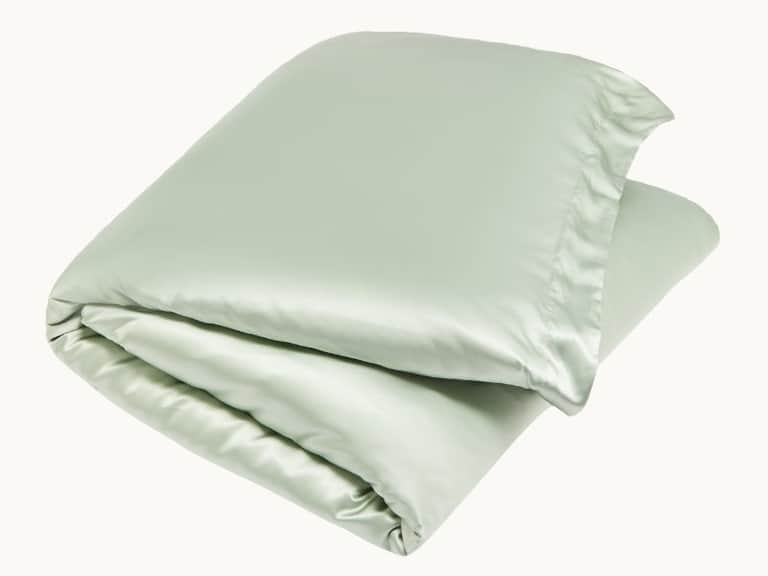
For example, the silk pillow with a silk shell is described as having a removable, zippered 16 momme charmeuse silk cover and a Grade 6A double-strand mulberry silk filling. That combination makes the relationship between shell and fill explicit: the outside provides a smooth silk surface, while the interior supplies the pillow’s loft. Its removable shell also has a practical implication for cleaning that a sewn-in cover may not share.
What “silk-filled” can mean
Silk filling is not necessarily one uniform material in every pillow. Product descriptions may refer to long-strand silk, silk floss or a silk blend. They may also describe a layered construction in which silk sits alongside a core made from another fiber. Reading the full composition is essential: a pillow can contain silk without being made entirely of silk, and the shell material may differ from the fill.
Long-strand mulberry silk is a common phrase in silk bedding descriptions. Mulberry silk refers to silk produced by silkworms raised primarily on mulberry leaves; “long-strand” describes the length and form of silk fibers used in a textile or filling. In pillows, longer fibers may be laid in layers or arranged within an inner casing. The exact result depends on how the maker processes and assembles them, so the fiber name alone cannot tell you precisely how firm or lofty the pillow will feel.
Other pillows combine silk with a resilient core. A blend may be intended to balance the softness of silk with additional structure, helping the pillow hold a particular shape. In those cases, ask what percentage of the filling is silk, what the other component is, and how the layers are arranged. “Silk blend” is a broad description; percentages and construction details make it meaningful.
A useful example is the Mulberry Silk Blend Pillow, which is described as having a cotton sateen casing and a fill made from 50% pure long-strand mulberry silk with a polyester core. That is a distinctly different construction from a pillow whose shell and fill are both silk. The blended interior signals a design that combines silk with another material to provide loft and shape; the cotton casing creates a separate surface layer around that fill.
The fill shapes loft and support
Loft is the pillow’s height when it is at rest, while support is how it responds when a person’s head and neck press into it. These are related but not interchangeable. A tall pillow can compress substantially, and a lower-profile pillow can feel comparatively firm. The fill’s material, amount and arrangement all contribute to the balance.
Silk filling is often presented as lightweight and soft, but the phrase does not define a single firmness level. Two silk-filled pillows can differ in fiber density, fill quantity, layering and casing. A pillow with a supportive core may feel more structured than one filled solely with loose or layered silk fibers. Likewise, a thick fill may feel plush at first but still compress under weight.
Sleep position can help clarify what kind of support to investigate. Side sleepers often need enough height to bridge the space between shoulder and head, while back sleepers may prefer a more moderate loft. Stomach sleepers commonly find that a thinner, softer pillow is more comfortable. These are starting points, not rules: mattress firmness, body proportions and personal preference also affect alignment and comfort.
When a product description gives only fiber content, it may not answer questions about loft or firmness. Look for dimensions, fill weight, construction notes and any guidance about the pillow’s intended feel. If those details are not available, treat the uncertainty honestly rather than assuming that “silk” automatically means supportive, firm or suitable for every sleeping position.
Airflow, warmth and the feel of the sleep surface
Comfort at night depends partly on the small environment around the body: heat, humidity, bedding layers and room conditions all play a role. Silk is frequently valued for its light feel and ability to help manage temperature, but the whole pillow matters. A tightly woven shell, dense fill, protective cover or warm room can influence how a pillow feels just as much as its named fiber.
A breathable outer fabric can help the surface feel less stuffy, while the filling’s structure affects how air moves through the pillow. A silk-filled design with a cotton shell may feel different from one with a silk shell, even when both use silk inside. Neither construction is universally cooler: weave, thickness, fill density and the sleeper’s environment complicate simple comparisons.
Silk is also less absorbent than cotton in some bedding comparisons, a quality often discussed in connection with pillowcases. That should not be mistaken for a guarantee that a silk pillow stays dry or will suit every sleeper. People who perspire heavily, use skincare products at bedtime or prefer a more absorbent surface may want to compare fabric choices and laundering routines with particular care.
It can help to separate the feel of the pillowcase from the feel of the pillow itself. A person may like the glide of silk at the surface while preferring a firmer fill inside. In that case, a silk pillowcase over a pillow with a different filling could provide the preferred contact surface without requiring the entire pillow to be silk. Conversely, someone interested in the material throughout the pillow should verify both the shell and fill specifications.
Removable covers and the realities of care
Care instructions are not fine print to skim after choosing a pillow. They are part of the design. A removable cover can make routine cleaning more manageable, but it does not mean the inner pillow can be washed in the same way. The shell and filling may have separate instructions, and a delicate fiber can be damaged by heat, agitation, bleach or unsuitable detergents.
Before choosing a silk-filled pillow, check whether its cover is removable and whether the fill can be washed, spot cleaned, aired or professionally cleaned. Follow the specific care label rather than relying on general advice for silk. Some silk covers can be hand washed or laundered on a cold, delicate cycle with mild detergent; others may require a different approach. Air drying is commonly recommended for delicate silk, while tumble drying can create unnecessary heat and friction.
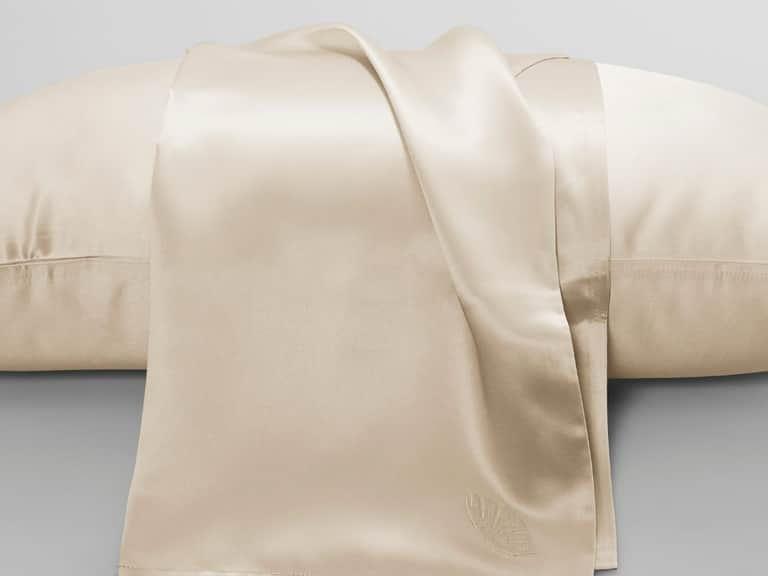
For an example of a cover with its own care directions, the La Seta Mulberry Silk Pillowcase with Embroidery is made from 22 momme charmeuse mulberry silk and has an envelope closure. Its care guidance allows gentle hand washing or a delicate machine cycle with cold water and mild detergent, followed by flat or hanging drying; bleach and tumble drying are not recommended. It is a pillowcase rather than a filled pillow, but it illustrates why shell care should be considered separately from fill care.
Use a removable washable pillow protector if appropriate for the pillow’s care instructions and desired feel. A protector can add a layer between the pillow and everyday oils, moisture and dust, but it may also change the surface sensation and warmth. Regularly airing bedding and washing pillowcases according to their labels can help keep the sleep setup fresh without subjecting the inner pillow to unnecessary cleaning.
How to compare specifications without getting lost in jargon
Silk descriptions can contain terms that sound precise but answer different questions. Momme, for instance, is a traditional unit used to describe silk fabric weight. It can help compare fabrics when the same type of material and construction are being considered, but it does not directly state pillow firmness, fill amount or overall quality. A pillow’s shell weight and its internal fill should not be confused.
Similarly, a grade or quality designation may refer to the silk fiber, but it does not by itself explain how much filling is used, how it is layered or what support the finished pillow offers. The most informative descriptions identify the materials in each part and explain how those parts are assembled. Certification claims should also be read narrowly: a textile safety certification relates to the scope of the named standard, not every possible performance or environmental claim.
Use a simple comparison checklist when reviewing pillow materials:
- Shell fiber: Is the outer fabric silk, cotton or a blend?
- Fill composition: Is the filling all silk, silk blended with another fiber, or silk arranged around a core?
- Construction: Are fibers layered, enclosed in an inner casing or combined with a separate support component?
- Loft and dimensions: Are height, size or fill weight stated clearly?
- Cover access: Is there a zipper, an envelope opening or a permanently sewn shell?
- Care: Are the shell and filling cleaned in the same way, or are separate instructions provided?
- Personal fit: Does the described profile suit your preferred sleeping position and support level?
These questions are more useful than trying to identify a universally “best” pillow. The right answer depends on whether a person values a slick surface, a resilient core, easy cover care, a particular loft or a specific fiber composition. What feels inviting in a product description still needs to make sense in everyday use.
Silk shell, cotton shell or silk blend?
A silk shell emphasizes a smooth silk surface and may appeal to people who want the pillow itself to have a silk exterior. A cotton shell can offer a more familiar woven feel and may be preferred by sleepers who want silk in the fill but not directly against the face. A silk blend or a silk layer combined with a core can offer a middle ground in construction, pairing some silk content with a material chosen to add shape or resilience.
None of these choices determines comfort on its own. Shell weave and finish matter; so do seams, fill arrangement and how the pillow responds under pressure. For example, a silk-filled pillow with a cotton shell is not simply a less luxurious version of a silk-shell pillow. It is a different material combination, with a distinct surface and potentially different care considerations.
Likewise, a silk pillowcase and a silk-filled pillow serve different purposes. A pillowcase covers the outside of a pillow and can change the feel at the face. A silk-filled pillow uses silk as part or all of the interior filling. Some products combine both features, but buyers should confirm that the product description says so rather than infer it from a name.
A practical way to make the decision
Begin with the sensation you want. If the most important detail is a smooth surface against hair and skin, focus first on the shell and consider whether a silk pillowcase would meet that preference. If you want the pillow’s interior to include silk, read the fill composition and identify any additional core or blend. If you need a particular degree of lift, look for dimensions and construction details rather than assuming the fill material predicts firmness.
Next, think about maintenance. A removable cover may be useful if you want to clean the outer layer separately, but check how the inner pillow is maintained. Consider whether the care routine fits your household habits and whether the required detergent, drying method or professional service is practical for you.
Finally, compare product descriptions side by side. A clear specification should distinguish shell from fill and state any mixed materials. If a description uses broad terms such as “silk blend” without identifying the components, the composition remains uncertain. Seek clarification where possible, particularly if fiber content, allergies or cleaning requirements are important to your decision.
The bottom line
A silk-filled pillow is not defined by one fiber claim. Its shell determines much of the immediate surface feel; its fill contributes to loft and how the pillow yields; and its construction influences whether the materials remain arranged as intended. Care instructions complete the picture, especially when a removable cover and an inner pillow require different treatment.
Compare silk pillows by asking what is on the outside, what is inside and how those parts work together. A silk shell, a cotton casing, a pure silk fill and a blended core each describe different design choices. Once those distinctions are clear, it becomes easier to find a pillow that matches your preferences for surface feel, support and maintenance—without expecting any single material to do everything.